
For South African businesses, energy has changed from an expense line item to a strategic variable that affects cost, risk and long-term competitiveness.
With further tariff increases, time-of-use (ToU) pricing, and new energy supply options entering the SA market, companies are under increasing pressure to get their energy strategy right. They already understand the need to secure commercial solar PV, but the question is how to structure its procurement.
Businesses looking into solar need to choose between owning a system outright through a turnkey Engineering, Procurement and Construction (EPC) model, or procuring power through a “PPA”, or power purchase agreement. Both routes can deliver savings, energy resilience, and decarbonisation benefits, but they come with different implications for capital, risk, and control.
This blog post outlines the key factors businesses should consider when choosing between EPC ownership and a PPA. It also explores how this decision is affected in a more complex energy landscape, with the rise of battery energy storage (BESS), wheeling, and where there is a growing need to structure bankable, high-performance energy projects. Our goal is to provide a practical overview to guide businesses that are beginning to explore solar power and related financing options as part of an energy strategy fit for the future.

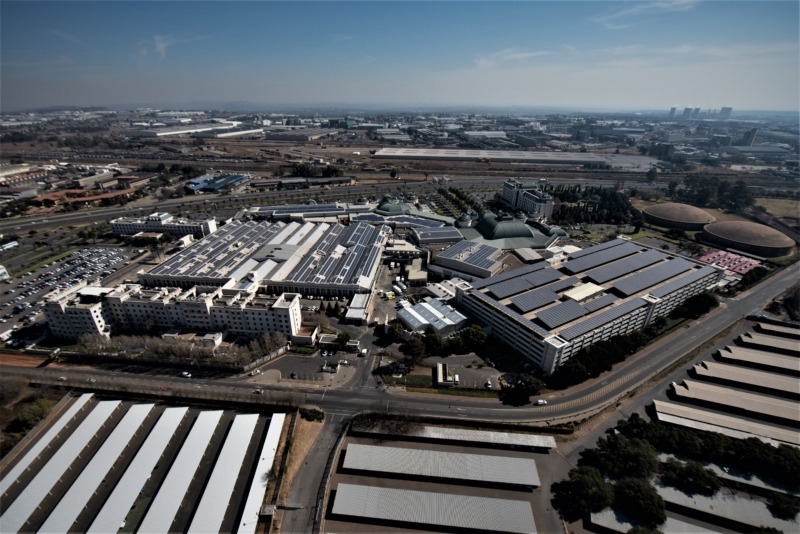
The 3.2 MW project at South Coast Mall was funded through a power purchase agreement
Turnkey EPC: Prioritising long-term cost reduction
The EPC model is a direct ownership approach. The business provides the capital for the design and construction of the solar plant, often using their own cash or asset-based financing. Once the system is commissioned, the business owns the equipment and all the electricity it generates.
The benefit of direct ownership
For companies with a strong balance sheet, ownership is often the best way to reduce exposure to rising electricity tariffs. By funding the system upfront, the margin that an external funder would charge is eliminated.
Over the 20- to 25-year lifespan of a quality solar installation, this model typically results in the lowest possible cost per kilowatt-hour. In commercial projects such as the 5.3 MW system Terra Firma built at Cornubia Mall, ownership enables the property fund to directly benefit from lower operating costs.
Navigating tax and incentives in 2026
It is important for businesses to base their investment case on current fiscal realities. While South Africa’s previous first-year renewable energy tax incentive under Section 12BA has passed, tax remains a critical part of the conversation. Businesses should assess standard depreciation allowances and tax treatments with their advisers.
Ownership still provides meaningful fiscal benefits, but the case now relies more heavily on strong technical and commercial fundamentals.
Operational responsibility and resilience
Ownership means the business is responsible for the system’s performance. Solar PV is not a “set-and-forget” technology.
To maintain expected performance and savings, systems require professional Operation & Maintenance (O&M), including monitoring, optimisation, and regular servicing. Without this, actual energy output can differ significantly from projections and businesses won’t achieve their intended ROIs.
Financed solutions: Moving performance risk and capital
Zero upfront cost and preserving capex
The most immediate draw of a Power Purchase Agreement (PPA) is that it requires no capital outlay from the business. For many organisations, this preserves cash for core priorities such as machinery upgrades, expansion, or operational investment, while still delivering cleaner energy and lower electricity costs.
Moving the risk to the provider
In a PPA, performance risk sits with the provider. If the system underperforms or a component fails, the energy user does not pay for the lost generation.
This “pay-for-performance” structure ensures that the provider is highly incentivised to use quality-approved, Tier 1 equipment and to maintain the system meticulously. For many businesses, transferring technical risk to a specialised partner is more valuable than the incremental savings of ownership.
Understanding IFRS 16 implications
From an accounting perspective, PPAs are not always fully off-balance sheet. Depending on how the agreement is structured, IFRS 16 may require the contract to be recognised as a lease. This does not change the underlying cash flow benefits, but it does affect financial reporting. Careful structuring and alignment with auditors are important to ensure the outcome aligns with the business’s financial objectives.
A practical comparison: Ownership vs PPA
When evaluating the two models for solar financing in South Africa, businesses should consider how capital, risk, and control align with their broader commercial strategy:
| Factor | Turnkey EPC (Own) | PPA (financed solution) |
| Upfront capital | High investment required | Zero upfront cost |
| Risk management | Client carries performance risk | Funder carries performance risk |
| Tax treatment | Standard depreciation (post-12BA) | Funder claims tax benefits |
| Operational effort | Requires O&M contract | Fully managed by the provider |
| Long-term cost | Lowest cost of energy | Moderate cost (includes funder margin) |
| Asset control | Full control over equipment | Contractual access to energy |
This comparison provides a useful baseline, but in practice, most modern energy strategies go beyond a simple either/or decision.

The 27 MW phased NCP Chlorchem solar programme, funded through power purchase agreements, is currently South Africa’s largest
BESS and wheeling considerations
As the energy market in South Africa matures, financing decisions require more than choosing between EPC and PPA. Increasingly, businesses are incorporating Battery Energy Storage Systems (BESS) and wheeling into their energy strategies, which adds both complexity and opportunity. These elements are typically layered into financing structures, rather than treated as standalone decisions.
Integrating battery energy storage systems (BESS)
BESS is no longer just a backup solution for load shedding; it is increasingly used for tariff arbitrage and to manage peak demand charges. This means businesses need to actively manage when and how energy is used, with direct implications for cost savings and system design.
Batteries are a significant capital expense, which makes the financing strategy particularly important. Many businesses adopt a hybrid approach:
- Buying the BESS via an EPC model to retain control over backup and resilience.
- Financing the solar PV through a PPA to preserve capital.
PPAs are also increasingly available for standalone BESS.
The role of wheeling
Wheeling allows a business to generate energy at a site with strong solar resources and to use that energy elsewhere on the grid.
Because wheeling involves complex multi-party agreements with Eskom or municipalities, these projects are often structured as PPAs. This allows the developer to manage regulatory approvals, grid access, and billing on behalf of the client. While some larger organisations in SA self-fund wheeled projects, many businesses prefer a PPA structure to simplify implementation and reduce administrative burden. In this context, wheeling is both a technical and a financing decision.
Delivering bankable energy projects
As energy options evolve – from EPC and PPA to more complex hybrid and wheeled solutions – the success of an energy strategy and projects depend both on the quality and reliability of the underlying system and components, and on how well projects are executed and managed in the long term. In principle, to ensure bankability, long-term performance should always take priority over the lowest upfront cost.
Other key factors also affect bankability and returns:
Regulatory hurdles and grid access
Approvals from NERSA and local authorities can affect project timelines. Delays in grid-tie approvals can delay commissioning and postpone financial benefits. This is particularly relevant for larger or more complex projects, including wheeling. A delivery partner with experience navigating regulatory processes ensures that engineering design, compliance requirements, and approval pathways are aligned and streamlined from the outset.
Tier 1 modules and long-term resilience
A solar plant is a 20-year commitment, and financing models depend on consistent long-term performance. Using Tier 1 modules and proven inverter technology is essential for both owned and PPA systems. Failures later in the lifecycle can undermine the financial model if components cannot be replaced or supported. Prioritising bankable, high-quality hardware ensures the system delivers on its promise over decades.
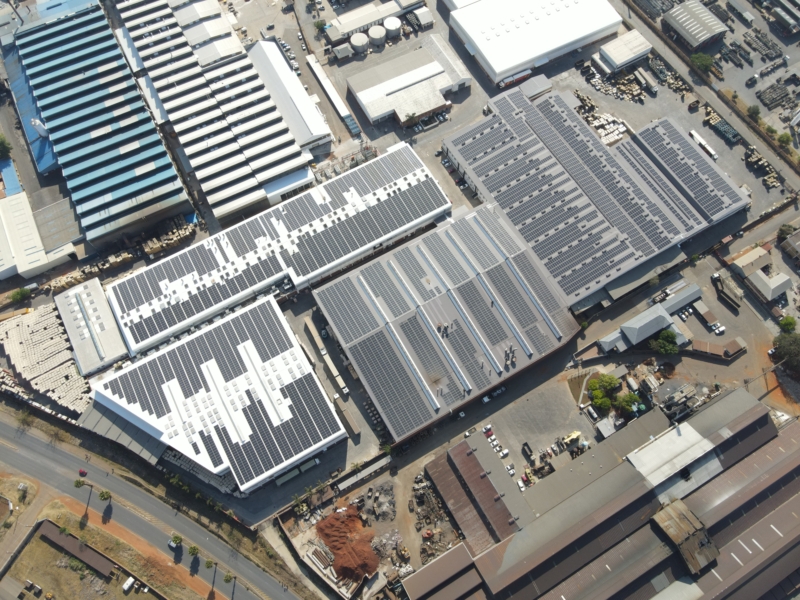
A self-funded 4.2 MW solar installation at Gayatri Cans
A holistic approach to energy management
As energy systems become more sophisticated, integrating various combinations of solar PV, BESS, grid supply, and potentially wheeled energy, financing really is only one part of the equation. To maximise returns and resilience, energy management is essential, and businesses and project operators need visibility into how energy is generated, consumed, and billed.
Whether you own your plant or procure energy through a PPA, Terra Firma’s COPPER metering and utilities solution provides:
- Real-time performance visibility: Tracking system performance against design expectations.
- Energy and cost insights: Understanding usage patterns and optimisation opportunities.
- Billing verification: Supporting accurate reconciliation of municipal bills and tariff structures.
- Operational decision-making: Informing how and when to use solar, grid, and battery energy.
Conclusion: Choosing the right partner for the journey
There is no single “right” answer between owning a solar system and signing a PPA. Ultimately, the right approach depends on capital availability, risk appetite, operational priorities, and long-term strategy, while taking into account complexities around BESS, wheeling, system design and long term performance. In the simplest terms:
- Choose ownership or EPC if you have the capital, want to maximise long-term savings, and are comfortable managing the asset (with the support of a professional O&M partner).
- Choose a PPA if you want to preserve capex, reduce technical risk, and achieve immediate cost improvements with zero upfront investment.
Terra Firma has the experience to guide businesses through this increasingly complex landscape. From turnkey EPC projects like Matlosana Mall to financed PPA solutions for clients like NCP Chlorchem and Maxion Wheels, our focus remains on bankable delivery and better energy solutions.
The energy environment in South Africa will continue to change rapidly. Partnering with a team that understands the engineering, commercial and regulatory implications is the most effective way to ensure your investment stands the test of time.
Contact us to start the conversation about your business’s energy future.

