

Distributed or onsite renewable energy generation – commercial and industrial systems installed at factories, mines and other large energy users – has become the quiet workhorse of South Africa’s energy transition.
These projects power businesses directly, reduce exposure to rising electricity tariffs, take pressure off the grid, and cut reliance on diesel and coal. They also improve energy security and competitiveness at a time when many sectors are under severe cost pressure. In practice, onsite solar PV and battery energy storage systems (BESS) are among the fastest and most deliverable forms of new energy capacity available to the country.
Yet despite strong demand and available private capital, the rollout of commercial and industrial solar in South Africa is being slowed by one critical constraint: grid-access rules designed for massive utility-scale power plants are being applied to much smaller onsite systems that sit behind the meter and do not export power.
The result is unnecessary delays, cost uncertainty and rising grid connection costs that are holding back investment at precisely the moment South Africa needs more generation capacity online.
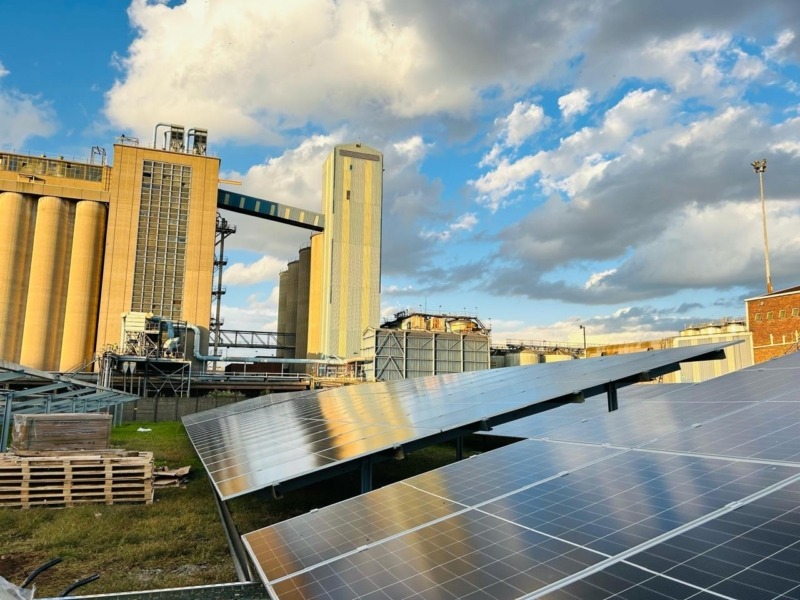
Maxion Wheels’s 2.7 MW onsite solar PV project. Mid-size, behind-the-meter systems cut energy costs and reduce grid pressure, but are still regulated like much larger utility-scale plants.
Distributed energy generation and South Africa’s energy transition
The South African energy transition increasingly depends on distributed energy generation. These projects typically consist of solar PV installations ranging from a few kilowatts to tens of megawatts, often paired with battery energy storage systems and, in some cases, energy wheeling arrangements.
For mines, manufacturers, data centres, logistics hubs and commercial property owners, onsite energy generation for businesses is no longer optional. It is a strategic response to sustained electricity price increases, grid instability and the need to decarbonise operations.
Importantly, these systems do not aim to replace the national grid. Instead, they reduce peak demand, lower overall electricity consumption from Eskom and municipalities, and provide flexibility through storage and demand management. In doing so, they support the broader South African energy transition while strengthening the resilience of the grid itself.
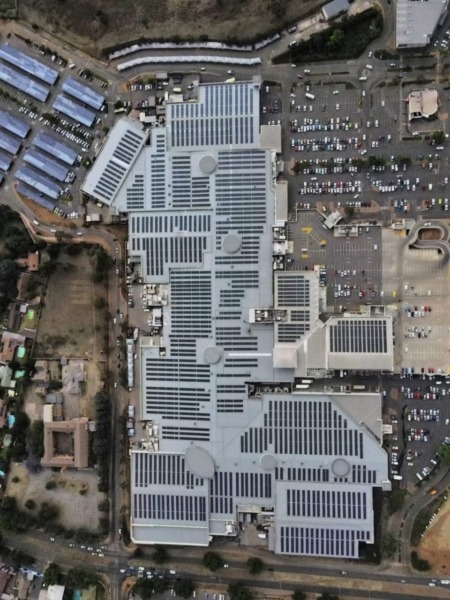
Commercial solar projects at shopping centres can be delivered relatively quickly, adding new generation capacity without the long lead times of utility-scale plants.
Demand and capital are not the problem
It is important to be clear: projects are being built. Many South African companies have already installed onsite solar and storage and are seeing real cost savings and improved energy stability.
There is no shortage of private capital for renewable energy in South Africa. Technology costs continue to fall, financing is available, and businesses are actively looking to invest in commercial and industrial solar.
The problem is not demand or funding. The greatest barrier is a grid-access process that is too slow, too rigid and not designed for the size and characteristics of the projects now driving the transition.
This is not a failure of the system, but an avoidable drag on the pace of investment.
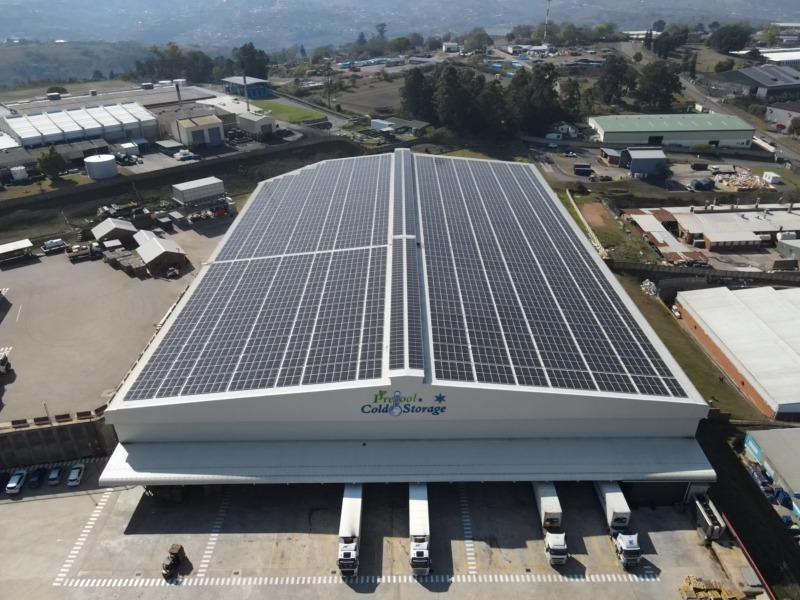
Onsite solar at Pre‑Cool Cold Storage supports one of the most energy-intensive parts of the value chain, where electricity reliability and cost are critical to operations.
Where projects get stuck: Eskom and municipal grid connections
Distributed energy generation projects can connect either to municipal electricity networks or directly to the Eskom grid. While delays exist in both cases, the most serious bottlenecks currently sit on the Eskom side.
Across our project pipeline, roughly a third of projects awaiting connection are Eskom-connected, with the remainder connecting through municipalities. Although more municipal projects are waiting overall, delays are generally less severe at municipal level because municipalities do not require a Cost Estimate Letter (CEL), which is where the main challenge lies.
Some municipalities choose to apply Eskom’s RETEC compliance process – the grid-code compliance tests originally developed for large utility-scale plants – to certain categories of embedded generation. This approach is not mandatory and is applied unevenly. Some municipalities, such as the City of Cape Town, apply these requirements strictly, which can slow projects, while others take a more pragmatic approach that speeds up grid connection.
Eskom grid connection and the Cost Estimate Letter (CEL)
Every Eskom-connected project must obtain a Cost Estimate Letter before it can proceed. The CEL sets out the expected grid connection costs, such as substation, feeder or line upgrades, as well as the timelines required for a project to connect safely to the grid.
Producing a CEL depends on scarce Eskom engineering capacity and requires input from several internal departments. While the stipulated timeline is three months, in practice it often stretches to six or twelve months. In one 7 MW embedded project currently under development, the application has been waiting for seven months, and Eskom has confirmed that processing has not yet started because resources were diverted to larger wheeling applications.
For large utility-scale plants that export power to the grid, this level of scrutiny may be justified. For a 7 MW onsite system at a single industrial site, it is disproportionate.
Unpredictable grid connection costs
Delays are only part of the problem. Grid connection costs associated with CELs are highly unpredictable. There is no document or tool that gives developers or customers an early indication of what costs a project may face.
Connection costs vary widely depending on the condition of the existing infrastructure, available capacity, Eskom’s grid planning priorities and the technical details of the connection. Even relatively small projects can trigger significant upgrade requirements.
As a result, CELs often arrive with scope and cost requirements that were impossible to anticipate at the feasibility stage. This disrupts budgets, complicates board approvals and delays investment decisions just as companies are ready to proceed.
CEL validity periods and market capacity constraints
CELs are valid for one year, but securing permits such as environmental approvals often takes longer. This forces companies to either continue development at risk or wait for a new CEL, both of which slow down investment.
At the same time, only a limited number of accredited grid consultants have the experience and specialised software required to conduct CEL-related grid impact studies. This creates additional bottlenecks and further increases development costs.
Who pays for network upgrades?
A major sticking point in the Eskom grid connection process is who pays for substation, feeder or line upgrades.
In theory, future projects connecting to the same substation can contribute to the cost of upgrades. In practice, this is rarely workable. The first project to connect – regardless of size – typically carries the full upfront cost, even though subsequent users will benefit from the upgraded infrastructure.
Without certainty that these costs will be recovered in future, the initial capital outlay becomes a significant barrier, even for otherwise sound projects.
A clearer and more predictable cost-sharing or clawback mechanism would help. If one project funds an upgrade, later users should contribute fairly, and costs linked to ageing infrastructure should be scaled so that smaller installations are not made unviable. While Eskom does attempt to cater for this in principle, it is rarely applied in practice.
Battery energy storage and missed opportunities
Battery energy storage systems have strong potential to support grid stability, reduce peak demand and enable more efficient use of renewable energy.
There is an established application process for storage to provide ancillary services, but in practice, customers who have already installed solar must restart the entire grid-access process if they later want to add batteries. This creates unnecessary duplication and delays.
A more practical approach would allow initial grid-access applications to earmark storage capacity, with final compliance confirmed during commissioning. This alone would save months of duplicated work and support wider deployment of BESS across commercial and industrial sites.
What a better grid-access process could look like
South Africa’s grid infrastructure is ageing and in need of urgent investment. Clear technical rules and safeguards are essential to protect network stability and power quality as more private generation comes online.
However, applying utility-scale requirements to much smaller onsite projects creates unnecessary friction without improving safety or reliability.
South Africa needs a fit-for-purpose grid-access process for “middle band” onsite projects between roughly 1 MW and 50 MW, for both municipal and Eskom-connected systems. Such a framework would retain necessary safeguards while scaling requirements to the actual impact of these projects.
Achieving this will require collaboration between Eskom, municipalities, Nersa, the renewable energy industry and large energy users.
A more streamlined and standardised approach, particularly around CELs and RETEC compliance, would relieve pressure on Eskom and municipal engineers, make the system easier to administer, and free up scarce technical resources for critical network upgrades.
Reform should also include clearer and more predictable CEL scope- and cost-setting processes, updated guidance on when upgrades are genuinely required, more frequent information on substation capacity, and consistent procedures across Eskom regions and municipalities.
Unlocking private investment without public funding
South Africa is not short of private capital for renewable energy. What is missing is a grid-access process that can get mid-size commercial and industrial projects online quickly and predictably.
The reforms outlined here require no public funding. They would unlock distributed energy generation that large energy users are ready to build, reduce pressure on the grid, and accelerate the South African energy transition in a practical and achievable way.
This article was first published as an op-ed by Business Report on IOL in December 2025. You can read the original article here.

